


What to Know Before Remodeling a Basement


Finishing a basement can double your square footage and raise your property’s value. If you plan to stay in your home long term, this is a great option. You can turn a grungy basement into an additional living space for your family. Because basement remodels typically require painting, flooring, and the addition of a bathroom or kitchen, you may want to check out our other blogs regarding these services.
Many renovations are daunting, but a basement reno may be the most of all. There are dozens of decisions to be made, from room layouts to general aesthetic and decor. At Landry R & R, we focus solely on the renovations, with a team of craftsmen and installers. However, if you need help with decorating, we work with an amazing interior designer, Dominique Maddox of Oak + Ollie. She creates vision boards and 3D renderings of your space to help with your beautifying needs.
Now let’s break down the steps of your new space.
Basement Remodel Step-By-Step
Step 1: Deciding Your Layout
Think of your basement as an empty shell. What do you want this space to be? How will finishing your basement make your house work better for you and your family? Ask yourself these questions before you begin...
Do you need your basement finished for guests (either short-term or long-term)?
Do you need more space for your growing family?
Are you finishing your basement to have a recreation area?
Are you finishing your basement to rent out and supplement income?
If you need more space for guests, either long-term or short-term, then you definitely want a full bathroom, a living area, and possibly a kitchenette.
If you want a finished basement for a growing family, then you’ll probably want more bedrooms with egress windows and a full bathroom.
If you want a finished basement for a recreation area, then your layout will have a lot of open spaces with a bathroom.
If you are finishing your basement to rent, then your layout will include a full kitchen, bathroom, living room, and a bedroom or two (depending on your available square footage).
Once you know your reason, it’s time to turn the space that collects junk into a brand new room.
Step 2: Getting Permitting
You will need to obtain the proper permits before work begins. Depending on your county, this can be a simple and quick process. However, you won't know until you get started. This will mostly be completed by your contractor, but it doesn't hurt to know the sequence of events.
Step 3: The Completion Process
Basement Plans and Demolition
After your estimate, your contractor will draw up a blueprint for your new basement. Once you approve, they will submit the plan to your county to obtain a permit. Then demolition will begin.
At the same time, your contractor will start framing out your rooms and any bulkheads around pipes or HVAC. After this, the plumber and electrician will install what they are contracted to do.
Then you will have the first inspection from your county. They will come and inspect the framing, insulation, fireproofing, electrical, and plumbing rough-ins.
Basement Renovation
Once demolition is complete, your renovators will finish drywalling and cover up new pipes with concrete. This step is the dirtiest of all. At Landry Renovations and Repairs, we minimize the mess by installing filters over your return vents or turning off your system while working. We also put up plastic barriers to keep the mess from other rooms in the home. Even though all these measures are taken, drywall dust is hard to stop completely.
Once this is complete, painting can begin. Painting is where the space starts to come together. With the new space ready, we move on to flooring, doors, trim, vanities, toilets, and shower doors. Then the electrician and plumber return to install fixtures, outlets, and other essentials. This will be the time for the final inspection. After final approval from the town, it is just the finishing touches.
What to Know Before Getting an Estimate
For detailed rundowns of what you should know before getting an estimate, you can read our individual blogs. We break down what you should prepare before talking to your contractor. We have blog posts about kitchen and bathroom renovations, as well as painting and flooring services.
Here are the basics of what you should know about each...
Kitchen Addition

Before getting a renovation, it is important to let your contractor know if there are items you want to keep or repurpose. Knowing in advance can help decrease the risk of items being broken or discarded.
For kitchens, you should have an idea about flooring, cabinets, countertops, backsplash, sinks, and paint. You don’t need exact designs picked out, but you should have general ideas about what you’d like and the overall layout.
Bathroom Addition

Before renovating or adding a bathroom to your basement, consider the type of flooring, tubs and showers, vanities, toilets, and accessories you want. Knowing the types of material you’d like and general design ideas can help us get an accurate estimate.
Painting
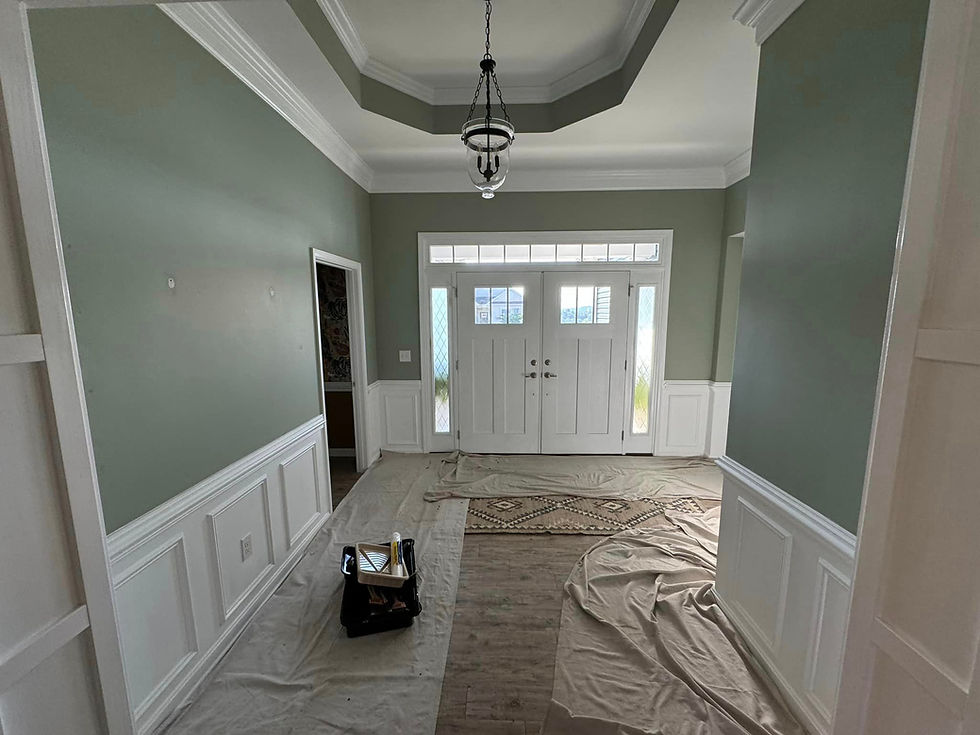
The color you want is totally up to you. You can take your time deciding on the exact shade, but it helps us to know how dark or light you are going. It is most important for your contractor to know if there is any previous damage, the size of the space, and if you prefer a certain brand or line of paint. We also like to know if you need ceilings, baseboards, doors, and trim painted in addition to your walls.
Flooring

It is important to know your flooring choices. You can choose from vinyl sheet flooring, vinyl planks, tile, or carpet. As far as installing or refinishing natural/engineered hardwood flooring, we do not do this. The companies that specialize in this can do it faster and cheaper than we can. Hardwood steps are the exception; we will take on these jobs.
We let clients purchase the flooring they like. This eliminates the need for us to put a budget in for the amount you can spend on flooring. This keeps us from overcharging or undercharging, since flooring has such a range in prices. We offer pick up and delivery of the flooring you choose from Lowes, Home Depot, or VA Discount Flooring, free of charge.
When we come for an estimate, having the type of flooring picked out is very helpful. We will calculate the square footage to determine how many boxes you need. We ask our clients to always purchase a few more boxes than the calculated amount. On the side of every box of flooring is the square footage each box covers. You will take the overall square footage of your space and divide it by the square footage of the number on your flooring box. This will give you the number of boxes needed.
Once you know your reason for finishing your basement and have your plans ready, you can contact us for an estimate. Make sure you are prepared before getting a quote, as this makes the process smoother for everyone.
